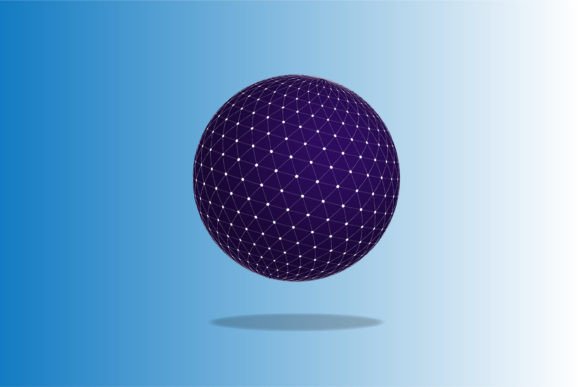
Polygonal Planet Design: Abstract 3D in Modern Workflow
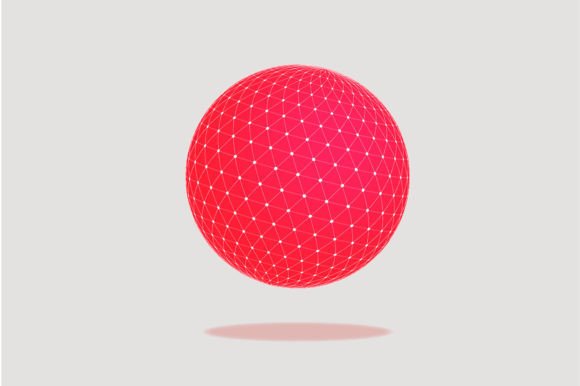
Polygonal Planet Design is a creative approach that blends geometric abstraction with three-dimensional modeling to produce visually striking and structurally complex digital landscapes. This method is particularly useful for designers, developers, and creators looking to integrate unique visual elements into their projects. Whether you're working on a video game environment, a virtual reality experience, or a digital art piece, Polygonal Planet Design offers a structured yet flexible way to explore form, space, and composition.
At its core, Polygonal Planet Design involves the use of polygons—flat, multi-sided shapes—to construct a 3D representation of a planetary surface. These polygons can be arranged in various configurations to mimic natural terrain, architectural structures, or entirely fictional worlds. The abstract nature of this design allows for experimentation with color, texture, and perspective, making it a powerful tool for both artistic and functional applications.
Where Polygonal Planet Design Fits in the Creative Process
Polygonal Planet Design can be integrated at multiple stages of a project, from initial concept development to final implementation. Before starting a project, it serves as a conceptual framework that helps define the visual direction and structural logic of a 3D environment. During the development phase, it provides a blueprint for building detailed models and optimizing performance. After the project is complete, it can be used for iterative improvements, updates, or repurposing in new contexts.
For example, a game designer might use Polygonal Planet Design to sketch out a basic terrain layout before moving on to more detailed modeling in software like Blender or Unity. A digital artist could employ it to create a stylized background for a video or animation. In both cases, the abstract 3D structure acts as a foundation that supports further refinement and customization.
How Polygonal Planet Design Interacts with Other Tools and Methods
While Polygonal Planet Design is a standalone concept, it often works in conjunction with other tools and techniques. For instance, it can be paired with procedural generation algorithms to automate the creation of complex planetary surfaces. It also integrates well with texturing and shading workflows, allowing designers to apply materials and lighting effects to polygonal structures.
When working with 3D modeling software, understanding the principles of Polygonal Planet Design can help users make more informed decisions about topology, edge flow, and mesh optimization. This knowledge ensures that the final model is not only visually compelling but also efficient and easy to manipulate within the software environment.
In collaborative settings, Polygonal Planet Design can serve as a common reference point for team members. By establishing a shared visual language, it reduces ambiguity and streamlines communication between artists, engineers, and project managers.
Practical Implementation Tips
To effectively implement Polygonal Planet Design, start by defining the purpose and scope of your project. Are you creating a realistic landscape, a surreal environment, or something entirely abstract? Clarifying these details will guide your choice of polygons, colors, and spatial arrangements.
Next, experiment with different polygon types and sizes. Triangles are ideal for creating sharp, angular forms, while quads offer more flexibility for smooth curves and transitions. Hexagons and other irregular shapes can add complexity and visual interest to your design.
Consider the scale and perspective of your work. A planetary surface viewed from above may require a different approach than one seen up close. Adjusting the size and placement of polygons accordingly can enhance realism and immersion.
Finally, test your designs in different environments. Whether you’re using a 3D rendering engine, a game engine, or a digital art platform, seeing how your Polygonal Planet Design performs in real-time can reveal opportunities for improvement and refinement.
Workflow Examples and Use Cases
One practical workflow involves using Polygonal Planet Design to generate a base mesh for a 3D scene. Start by sketching a rough layout of the planet’s surface using simple polygons. Then, refine the shape by adjusting edges, adding depth, and incorporating textures. This process can be repeated iteratively, allowing for continuous evolution of the design.
Another use case is in motion graphics and visual effects. A designer might use Polygonal Planet Design to create a dynamic, shifting backdrop for a video sequence. By animating the movement of polygons, they can simulate natural phenomena like tectonic shifts, atmospheric changes, or celestial events.
For educational purposes, Polygonal Planet Design can be used to teach geometry, spatial reasoning, and digital art fundamentals. Students can explore how different polygon configurations affect the overall appearance and structure of a 3D object, fostering both creativity and technical skill.
Factors to Consider for Long-Term Success
When integrating Polygonal Planet Design into your workflow, consider factors such as preparation, compatibility, and usability. Proper planning ensures that your designs align with project goals and technical constraints. Compatibility with existing tools and platforms is essential for seamless integration and efficient production.
Usability is another key factor. A well-structured Polygonal Planet Design should be easy to modify, expand, and reuse. This requires careful attention to organization, file management, and documentation. Consistency in design elements and naming conventions can also improve efficiency and reduce errors over time.
Quality control is equally important. Regularly review your work to ensure that it meets aesthetic, functional, and technical standards. This includes checking for visual coherence, structural integrity, and performance optimization, especially when working with large-scale or interactive 3D environments.
Conclusion: Embracing the Potential of Polygonal Planet Design
Polygonal Planet Design offers a versatile and creative approach to 3D modeling that can enhance a wide range of projects and workflows. By combining geometric abstraction with practical application, it empowers designers, developers, and creators to push the boundaries of visual storytelling and digital expression.
Whether you're just starting out or looking to refine your skills, incorporating Polygonal Planet Design into your process can lead to more innovative and impactful results. With careful planning, experimentation, and integration, it can become an essential part of your creative toolkit.