Calculator 3D Illustration: A Powerful Tool for Visualizing Complex Calculations
In today’s fast-paced digital world, the need for clarity and precision in mathematical tasks has never been more critical. Whether you're a student, a professional, or someone simply looking to understand complex calculations, the Calculator 3D Illustration offers a unique way to visualize and interact with numbers. This innovative approach transforms abstract equations into tangible, three-dimensional models that make learning and problem-solving more intuitive and engaging.
What Is a Calculator 3D Illustration?
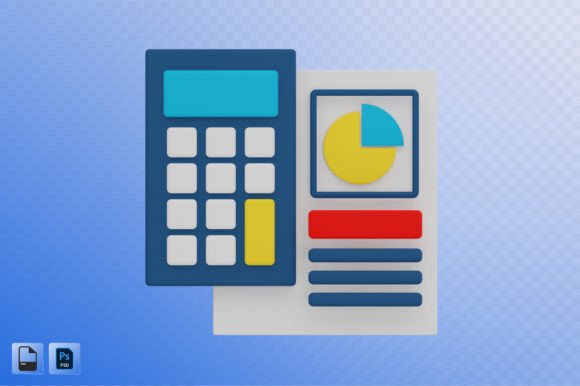
A Calculator 3D Illustration is a visual representation of a calculator that extends beyond the traditional two-dimensional design. It uses three-dimensional graphics to depict the layout, functions, and operations of a calculator in a more immersive and interactive format. This type of illustration is particularly useful for educational purposes, as it helps users grasp how different buttons and features work together in real-time scenarios.
Unlike standard calculator images, which are flat and static, a Calculator 3D Illustration can show depth, perspective, and even animation. For example, when a user presses a button, the illustration might highlight the corresponding function or display a step-by-step breakdown of the calculation process. This dynamic presentation makes it easier for learners to follow along and retain information.
Key Features of a Calculator 3D Illustration
One of the most compelling aspects of a Calculator 3D Illustration is its ability to showcase the physical and functional elements of a calculator in a realistic manner. Here are some of the key features that make this type of illustration stand out:
- Realistic Design: The illustration mimics the look and feel of a real calculator, complete with buttons, display screens, and control panels.
- Interactive Elements: Users can often click on different parts of the illustration to see how each component works, making it a valuable tool for hands-on learning.
- Animated Transitions: Some illustrations include animations that demonstrate how calculations are performed, such as showing the movement of numbers from input to output.
- Customizable Views: Depending on the platform or software, users may be able to rotate, zoom, or change the perspective of the illustration to better understand its structure.
These features not only enhance the visual appeal of the illustration but also contribute to a deeper understanding of how calculators function in both basic and advanced applications.
How Does a Calculator 3D Illustration Enhance Learning?
For students and educators, a Calculator 3D Illustration can be an invaluable resource. It provides a clear, visual breakdown of how different functions operate, which is especially helpful when dealing with complex mathematical concepts such as algebra, geometry, or calculus.
Imagine a student struggling to understand how a scientific calculator handles trigonometric functions. With a Calculator 3D Illustration, they can see exactly where the sine, cosine, and tangent buttons are located, how the display updates in real time, and what happens when they input specific values. This kind of visual guidance can significantly reduce confusion and improve comprehension.
Moreover, the illustration can be used to demonstrate how different types of calculators—such as basic, scientific, or graphing models—differ in their capabilities. By comparing these visual representations, learners can make informed decisions about which calculator best suits their needs.
Applications in Modern Workflows
The use of Calculator 3D Illustration extends beyond the classroom. In industries such as engineering, architecture, and finance, professionals often rely on calculators to perform precise calculations. A 3D illustration can serve as a reference guide, helping team members quickly identify the right tools and functions for their tasks.
For instance, an architect designing a building might use a Calculator 3D Illustration to visualize how measurements and proportions translate into actual structures. Similarly, a financial analyst could use it to explain complex formulas related to interest rates, investment returns, or risk assessments.
Even in everyday life, a Calculator 3D Illustration can be beneficial. Homeowners planning a renovation project might use it to calculate materials needed, while parents helping their children with homework can refer to it for a clearer explanation of math problems.
Choosing the Right Calculator 3D Illustration
When selecting a Calculator 3D Illustration, there are several factors to consider. First, determine the purpose of the illustration. Is it for educational use, professional training, or personal reference? The answer will influence the level of detail and interactivity required.
Another important consideration is the platform or medium on which the illustration will be displayed. Some illustrations are designed for websites, while others are optimized for mobile apps, presentations, or downloadable files. Ensuring compatibility with your intended audience is essential for maximizing its effectiveness.
Additionally, look for illustrations that offer clear labeling and explanations. A well-designed Calculator 3D Illustration should not only look good but also provide accurate and informative content. Avoid overly complex designs that may confuse rather than clarify.
Future Trends in Calculator Visualization
As technology continues to evolve, the potential for Calculator 3D Illustration is expanding. Advances in augmented reality (AR) and virtual reality (VR) are opening new possibilities for interactive learning experiences. Imagine being able to hold a virtual calculator in your hands, manipulate its buttons, and see how each action affects the results in real time.
Furthermore, the integration of artificial intelligence (AI) could lead to personalized learning experiences. An AI-powered Calculator 3D Illustration might adapt to a user's skill level, offering tailored explanations and examples based on their progress and preferences.
These innovations suggest that the future of calculator visualization is bright, with endless opportunities for improving education, productivity, and accessibility.