Exploring the Practical Uses of 3D Geometric Objects
3D geometric objects are more than just shapes on a screen. They’re tools that can be used in a variety of real-world scenarios, from design and engineering to education and marketing. Understanding how these objects work and where they fit into daily life can help you make better decisions about when and how to use them.
What Are 3D Geometric Objects?
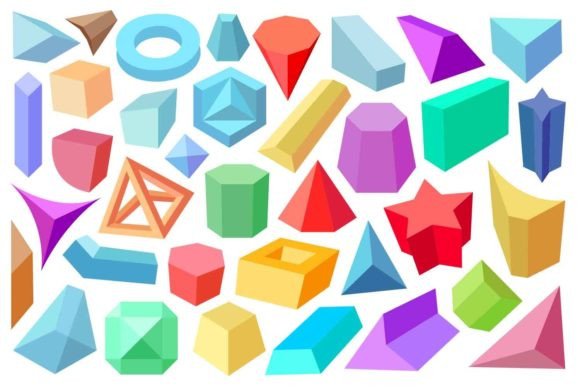
At their core, 3D geometric objects are digital representations of three-dimensional shapes. These can range from simple forms like cubes and spheres to complex structures like polyhedrons and fractals. Unlike 2D shapes, which exist on a flat plane, 3D objects have depth, width, and height, allowing them to be viewed from multiple angles. This makes them incredibly useful for visualizing and working with spatial relationships.
These objects are often created using specialized software or generated through mathematical algorithms. Whether you're designing a product, creating an animation, or teaching geometry, 3D geometric objects offer a powerful way to explore and manipulate space.
Where and When Do People Use 3D Geometric Objects?
3D geometric objects are used in many different contexts. For example, architects might use them to visualize building designs before construction begins. Engineers could rely on them to test structural integrity or simulate mechanical systems. In education, teachers might use them to help students understand abstract concepts like volume or surface area.
Even in everyday situations, 3D geometric objects come into play. If you're planning a home renovation, you might use 3D modeling tools to see how furniture will fit in a room. If you're a content creator, you could use 3D objects to add visual interest to your videos or social media posts.
Real-World Applications Across Different Fields
Let’s look at some specific examples of how different professionals and hobbyists use 3D geometric objects:
- Designers and Artists: Graphic designers and artists often use 3D geometric objects to create logos, illustrations, and animations. These objects can be manipulated to form unique visual elements that stand out in a crowded market.
- Engineers and Scientists: Engineers use 3D models to simulate real-world conditions. For instance, a car engineer might use 3D geometric objects to test aerodynamics or material stress. Scientists might use them to model molecular structures or planetary systems.
- Educators and Students: Teachers can use 3D geometric objects to make math and science more engaging. Instead of just describing a cube, a teacher can show a student how it looks from all sides, helping them grasp the concept more quickly.
- Marketers and Businesses: Marketers use 3D objects to create eye-catching ads and product presentations. A small business owner might use 3D models to showcase their products online, giving customers a better sense of what they’re buying.
How Different Users Benefit From 3D Geometric Objects
The benefits of 3D geometric objects vary depending on who is using them. A student might find them helpful for understanding complex math problems, while a designer might use them to create more dynamic visuals. A business owner could use them to improve customer engagement and sales.
For example, a freelance graphic designer might use 3D geometric objects to create custom illustrations for clients. A teacher might use them to explain geometry in a more interactive way. A product developer could use them to prototype new items before manufacturing.
The key is to match the right tool to the right task. If you’re looking to enhance your workflow, consider how 3D geometric objects can simplify or improve your current processes.
What to Consider Before Using 3D Geometric Objects
Before diving into 3D geometric objects, there are a few things to keep in mind. First, think about your goals. What do you want to achieve with these objects? Are you trying to create art, solve a problem, or teach someone something?
Next, consider the tools you’ll need. Some 3D modeling software can be complex, so it’s important to choose a platform that matches your skill level. If you're new to this, start with user-friendly tools that offer tutorials and support.
Also, think about the time and resources required. Creating high-quality 3D objects can take time, especially if you’re working on detailed projects. Make sure you have the patience and dedication needed to complete your work.
Connecting Features to Real Outcomes
Understanding the features of 3D geometric objects can help you see how they lead to real results. For instance, the ability to rotate and zoom in on a 3D object allows users to examine it from all angles, which is invaluable in design and engineering. The precision offered by these objects ensures accuracy in measurements and proportions, which is essential in fields like architecture and manufacturing.
Additionally, the flexibility of 3D objects means they can be adapted for different purposes. A single geometric shape can be modified to fit a variety of needs, whether it's part of a larger structure or a standalone element in a digital scene.
Conclusion: Making the Most of 3D Geometric Objects
Whether you're a professional, a student, or a hobbyist, 3D geometric objects offer valuable tools for exploring and creating in a three-dimensional world. By understanding their uses, benefits, and limitations, you can make informed decisions about how to incorporate them into your work or daily life.
From enhancing educational experiences to improving business presentations, the applications of 3D geometric objects are vast and varied. With the right approach, they can become a powerful asset in your creative or professional toolkit.